

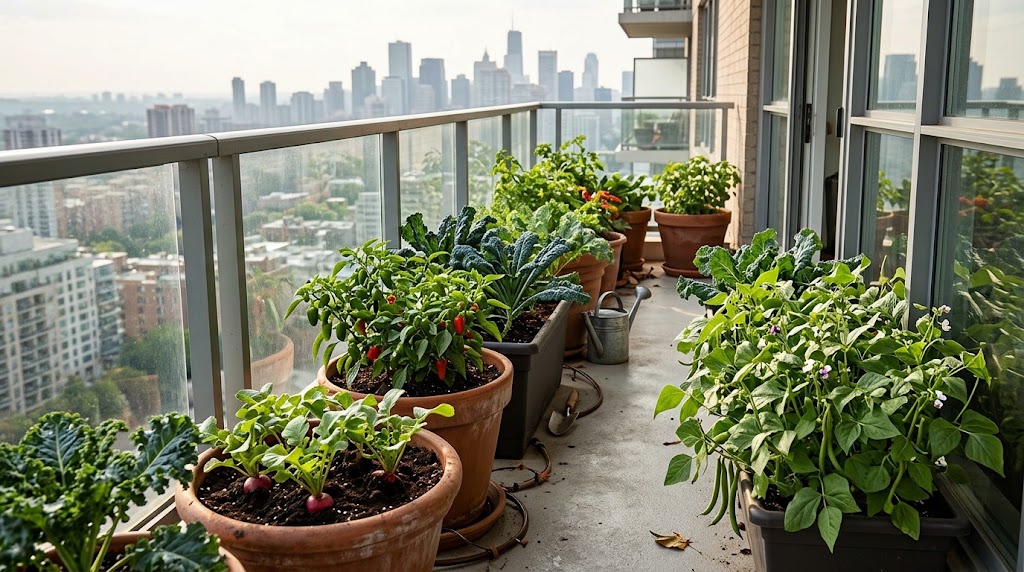
If you garden on a breezy high-rise patio and want to harvest fresh food without stems snapping in sudden gusts, choosing the best wind tolerant balcony vegetables is an easy, game-changing strategy.
When I moved to an 8th-floor apartment, I quickly discovered that gardening high above street level is an entirely different world. Down on the sidewalk, the weather felt like a pleasant, gentle spring breeze. But up on my balcony, wind currents swirling between tall concrete towers acted like a wind tunnel. My first batch of tall, vining indeterminate tomatoes snapped like toothpicks, my pole bean trellises blew over, and broad squash leaves shredded into ragged brown ribbons within two weeks.
High winds present three severe physiological challenges for container vegetables: mechanical stem breakage, physical pot tipping, and severe desiccation (wind stripping moisture from leaf cells faster than roots can absorb it).
Fortunately, you do not have to give up on growing fresh, organic produce in the sky. By selecting naturally compact, low-profile, flexible-stemmed, and underground root crops, you can build a resilient container garden that laughs off gusty conditions while yielding abundant harvests.
According to urban agricultural research from the University of Florida IFAS Extension, low-profile container crops with a low center of gravity experience up to 60 percent less wind drag and mechanical damage than upright vining cultivars on high-rise urban structures.
Here is your complete, bookmark-worthy guide to the 10 best wind tolerant balcony vegetables.
Why Growing Wind Tolerant Balcony Vegetables Works So Well
Aerodynamic, compact vegetables stay low to the container rim where surrounding walls and railing structures provide natural wind shadows.
Selecting wind tolerant balcony vegetables prevents heartbreaking stem snaps, eliminates soil blow-out, reduces water stress, and ensures high-altitude apartment dwellers can harvest crisp organic vegetables all season long.

10 Best Wind Tolerant Balcony Vegetables for High Patios
Here are the top 10 resilient vegetable crops engineered by nature to withstand blustery balcony microclimates.
1. Tuscan Lacinato Kale / Dinosaur Kale (Brassica oleracea)
Lacinato kale is the undisputed champion of wind tolerant balcony vegetables. Unlike broad, flimsy lettuces that tear in gales, dinosaur kale produces thick, leathery, dark blue-green strap leaves with a dimpled, corrugated texture that naturally channels wind currents past the plant.
- Wind Resilience: ⭐⭐⭐⭐⭐ Superior (Thick, fibrous leaves resist tearing).
- Plant Profile: Upright, sturdy central palm-like stalk.
- Pot Depth: 10 to 12 inches.
- Explore More Resilient Crops: Learn about companion evergreens in 10 Best Wind Tolerant Balcony Plants for High-Rise Patios.
2. Dwarf Determinate Bush Tomatoes (Micro-Dwarf Cultivars)
While tall vining tomatoes snap easily, micro-dwarf tomatoes (such as ‘Tiny Tim’, ‘Red Robin’, or ‘Orange Hat’) grow stocky, thick, wood-like central stems that top out at just 12 to 18 inches.
- Wind Resilience: ⭐⭐⭐⭐⭐ Superior.
- Plant Profile: Low-center-of-gravity compact bush.
- Pot Depth: 8 to 10 inches in heavy pots.
- Harvest Yield: Hundreds of sweet cherry tomatoes on wind-resistant branches.
3. Crisp Radishes (Raphanus sativus)
Because their edible treasure develops entirely beneath the soil surface, radishes are virtually immune to wind damage. Their low-growing surface leaves stay under 4 inches high.
- Wind Resilience: ⭐⭐⭐⭐⭐ Superior.
- Plant Profile: Ultra-low underground root crop.
- Pot Depth: 6 inches in heavy trough planters.
- Days to Harvest: Lightning-fast 21 to 25 days from seed.
4. Dwarf Bush Green Beans (Phaseolus vulgaris)
Unlike pole beans that act like sails on high trellises, dwarf bush beans grow in sturdy, self-supporting 14-inch mounds. Their flexible stems bend with wind gusts rather than breaking.
- Wind Resilience: ⭐⭐⭐⭐ High.
- Plant Profile: Self-supporting compact bush.
- Pot Depth: 8 to 10 inches.
- Bonus: Nitrogen-fixing root nodules feed container soil naturally.
5. Compact Chili Peppers & Jalapeños (Capsicum annuum)
Chili peppers feature dense, fibrous woody stems and small, glossy, tear-resistant leaves. Potted jalapeños and habaneros stay under 20 inches while producing heavy yields.
- Wind Resilience: ⭐⭐⭐⭐ High.
- Plant Profile: Branching woody mini-shrub.
- Pot Depth: 3- to 5-gallon heavy ceramic container.
- Protection Tip: Pair with methods from How to Protect Balcony Plants from High Winds.
6. Baby Carrots (Daucus carota subsp. sativus)
Round or half-long baby carrots (like ‘Paris Market’ or ‘Danvers Half Long’) grow underground, shielded from wind. Their feathery foliage is thin and aerodynamic, allowing breezes to pass through with zero resistance.
- Wind Resilience: ⭐⭐⭐⭐⭐ Superior.
- Plant Profile: Aerodynamic feathery tops with subterranean roots.
- Pot Depth: 10 to 12 inches deep.
- Soil Tip: Keep potting mix loose and stone-free for straight roots.
7. Rainbow Swiss Chard (Beta vulgaris)
Swiss chard features thick, succulent, flexible midribs that act like internal shock absorbers, bending under violent wind gusts and springing right back upright undamaged.
- Wind Resilience: ⭐⭐⭐⭐ High.
- Plant Profile: Clumping rosette with fibrous, flexible ribs.
- Pot Depth: 8 to 10 inches.
- Color Bonus: Fiery red, yellow, and magenta stalks brighten up high-rise balconies.
8. Green Onions & Scallions (Allium fistulosum)
Scallions feature hollow, tubular, cylindrical leaves. In engineering and nature, cylinders provide the most aerodynamic shape possible, deflecting air currents from all directions with minimal wind resistance.
- Wind Resilience: ⭐⭐⭐⭐⭐ Superior.
- Plant Profile: Aerodynamic vertical hollow tubes.
- Pot Depth: 6 inches.
- Harvest Style: Cut green tops; they regrow continuously for months.
9. Compact Bush Cucumbers (Cucumis sativus ‘Spacemaster’)
‘Spacemaster’ produces short, 24-inch sturdy vines with thick stems that hug the container soil line, avoiding the wind danger of tall vertical trellises.
- Wind Resilience: ⭐⭐⭐⭐ High.
- Plant Profile: Low-trailing compact ground bush.
- Pot Depth: 12 inches (5 gallons).
- Yield: Crisp 7-inch slicing cucumbers in high-rise containers.
10. Shungiku / Garland Chrysanthemum Greens (Glebionis coronaria)
A staple in Asian cooking, garland greens feature deeply lobed, serrated, aromatic foliage that handles high-altitude winds and chilly weather without wilting.
- Wind Resilience: ⭐⭐⭐⭐ High.
- Plant Profile: Branching, rugged salad green.
- Pot Depth: 6 to 8 inches.
- Explore More Compact Crops: Read our vegetable selection guide in 10 Best Small Space Balcony Vegetables.
High-Rise Vegetable Wind Resistance Matrix
Use this quick-reference table to match your balcony’s wind exposure with the right vegetable crops:
| Vegetable Crop | Wind Resistance Profile | Canopy Height | Ideal Container Depth | Days to Harvest | Wind Survival Rating |
|---|---|---|---|---|---|
| Lacinato Kale | Corrugated, Leathery Foliage | 18–24 Inches | 10–12 Inches | 55–65 Days | ⭐⭐⭐⭐⭐ Maximum |
| Micro-Dwarf Tomato | Stocky Woody Main Stem | 12–16 Inches | 8–10 Inches | 60 Days | ⭐⭐⭐⭐⭐ Maximum |
| Crisp Radishes | Subterranean Root | 3–5 Inches | 6 Inches | 21–25 Days | ⭐⭐⭐⭐⭐ Maximum |
| Bush Beans | Flexible Low Mound | 12–15 Inches | 8–10 Inches | 50–55 Days | ⭐⭐⭐⭐ High |
| Chili Peppers | Dense Woody Mini-Shrub | 18–22 Inches | 12 Inches (5 Gal) | 75 Days | ⭐⭐⭐⭐ High |
| Baby Carrots | Thin Aerodynamic Foliage | Underground | 10–12 Inches | 60–70 Days | ⭐⭐⭐⭐⭐ Maximum |
| Swiss Chard | Shock-Absorbing Ribs | 12–16 Inches | 8–10 Inches | 50 Days | ⭐⭐⭐⭐ High |
| Scallions | Tubular Aerodynamic Leaves | 10–12 Inches | 6 Inches | 45 Days | ⭐⭐⭐⭐⭐ Maximum |
| Bush Cucumber | Low-Trailing Ground Vine | 12–18 Inches | 12 Inches (5 Gal) | 55 Days | ⭐⭐⭐⭐ High |
| Garland Greens | Serrated Wind-Diffusing Leaf | 10–14 Inches | 6–8 Inches | 35–40 Days | ⭐⭐⭐⭐ High |
Container Staking and Care Tips for Wind Tolerant Balcony Vegetables
Even the sturdiest vegetables need smart potting physics on a high-rise balcony. Follow these four essential rules to keep your crops safe:
1. Anchor Pots with Low Centers of Gravity
Lightweight plastic pots blow over easily in 30 mph gusts. Always use heavy glazed ceramic, terracotta, or rectangular resin trough planters. Add a 2-inch bottom layer of heavy river gravel before adding potting mix to anchor the base against tipping.
2. Group Planters Behind Railing Windbreaks
Place your most sensitive fruiting vegetables against solid balcony walls or behind porous windbreak netting. Installing a woven bamboo screen or 50% mesh along your railing diffuses wind velocity by half while preserving sunlight. Follow our full setup steps in 10 Best Windbreaks for Balcony Gardens.
3. Use Multi-Point Staking with Flexible Soft Ties
If you grow taller dwarf peppers or eggplants, never tie them to a single rigid wooden stake with stiff wire. Instead, insert two or three bamboo stakes around the pot perimeter (creating a tripod) and tie stems using soft, stretchy green garden tape. This allows the plant to flex gently in the wind without snapping.
4. Mulch Heavily to Prevent Wind Desiccation
Wind strips moisture out of bare potting soil twice as fast as calm air. Top-dress all vegetable pots with a 2-inch layer of clean straw, pine bark, or coconut coir mulch to lock in soil moisture and prevent loose potting mix from blowing across your patio tiles.
Agricultural engineering guidelines from the Royal Horticultural Society (RHS) emphasize that high-altitude container plants require slightly higher potassium levels to build thick, rigid cell walls in stems, helping crops withstand continuous mechanical wind stress.
For complete high-rise storm preparation, review our troubleshooting guide on How to Protect Balcony Plants from High Winds.
Recommended Related Reading 📚
To continue building a resilient high-altitude apartment garden, explore these related guides on our website:
- 💨 10 Best Wind Tolerant Balcony Plants for High-Rise Patios – Complete guide to wind-hardy flowers, grasses, and shrubs.
- 🛡️ How to Protect Balcony Plants from High Winds – Step-by-step storm protection hacks for urban patios.
- 🎍 10 Best Windbreaks for Balcony Gardens – Top bamboo, mesh, and living barriers to diffuse gusts.
Frequently Asked Questions About Wind Tolerant Balcony Vegetables
What vegetables should you NEVER grow on a windy balcony?
Avoid tall, climbing pole beans, standard 8-foot indeterminate vining tomatoes, sprawling sweet corn, and giant broadleaf pumpkins. Their tall profiles act like sails in windstorms, leading to snapped stems, blown-over containers, and shredded leaves.
How does wind affect vegetable watering schedules?
Constant breezes accelerate leaf transpiration and soil evaporation rapidly. Check your container soil moisture every morning on breezy balconies; you may need to water twice as often during warm, windy spells compared to sheltered ground gardens.
Can hanging baskets work on a windy high-rise balcony?
Standard hanging wire baskets swing violently in high winds and dry out within hours. If you want hanging crops, mount them flush against solid interior building walls using heavy-duty lag bolts and safety carabiner clips rather than hanging them from outer railing corners.
Final Thoughts
Living on a high, breezy floor should never stop you from harvesting delicious homegrown vegetables. By choosing aerodynamic, low-profile crops like dinosaur kale, micro-dwarf tomatoes, radishes, and bush beans, you can easily cultivate wind tolerant balcony vegetables and enjoy an abundant, storm-proof edible patio all season long.
Make sure to bookmark this guide before planning your next high-rise planting session!
Which wind-resistant vegetable will you plant on your balcony first? Share your high-rise gardening questions and patio setups in the comments below!